
There's a particular point in a long D&D fight when you can feel the energy leaving the table. The first few rounds were exciting. Someone landed a critical hit, the rogue tried something clever, and the party briefly considered retreating when the enemy spellcaster appeared. Now the situation has settled into a familiar routine: players roll attacks, the DM subtracts hit points, and everyone waits for the remaining enemies to die.
Nothing is technically wrong. The rules are working, people are taking their turns, and the encounter is proceeding more or less as intended. Yet the fight has become boring, which is a strange outcome for something that was supposed to be one of the most exciting parts of the session.
When Dungeon Masters ask how to speed up D&D combat, the conversation often turns immediately to initiative trackers, digital dice, encounter calculators, or time limits for player turns. Those things can help, but they only address part of the problem.
Sometimes combat takes too long because the table is spending too much time resolving actions. Other times, the fight lasts a perfectly reasonable number of rounds but stops being interesting halfway through.
Those are two different problems, and they need different solutions.
First, find out where the time actually goes
Imagine a fight involving five player characters and six enemies. With eleven combatants participating, even a modest delay on each turn adds up quickly.
If each participant takes roughly one minute to decide and resolve their actions, a round already takes around eleven minutes. Five rounds could occupy most of an hour before you account for rules questions, descriptions, arguments about positioning, and the inevitable moment when someone realizes they forgot a bonus action.
Of course, combat isn't always that slow. Some turns take seconds, while complicated spells or unusual situations require more discussion. The important point is that a large encounter creates a lot of small interruptions, and those interruptions accumulate.
Before changing anything, pay attention to what happens during your next combat encounter. Are players waiting until their turn begins before deciding what to do? Does the DM repeatedly search for monster abilities? Are movement and positioning causing arguments? Or does everyone know exactly what they're doing, but the fight simply continues for too many rounds?
The answer tells you what actually needs fixing.
The encounter that should have taken twenty minutes
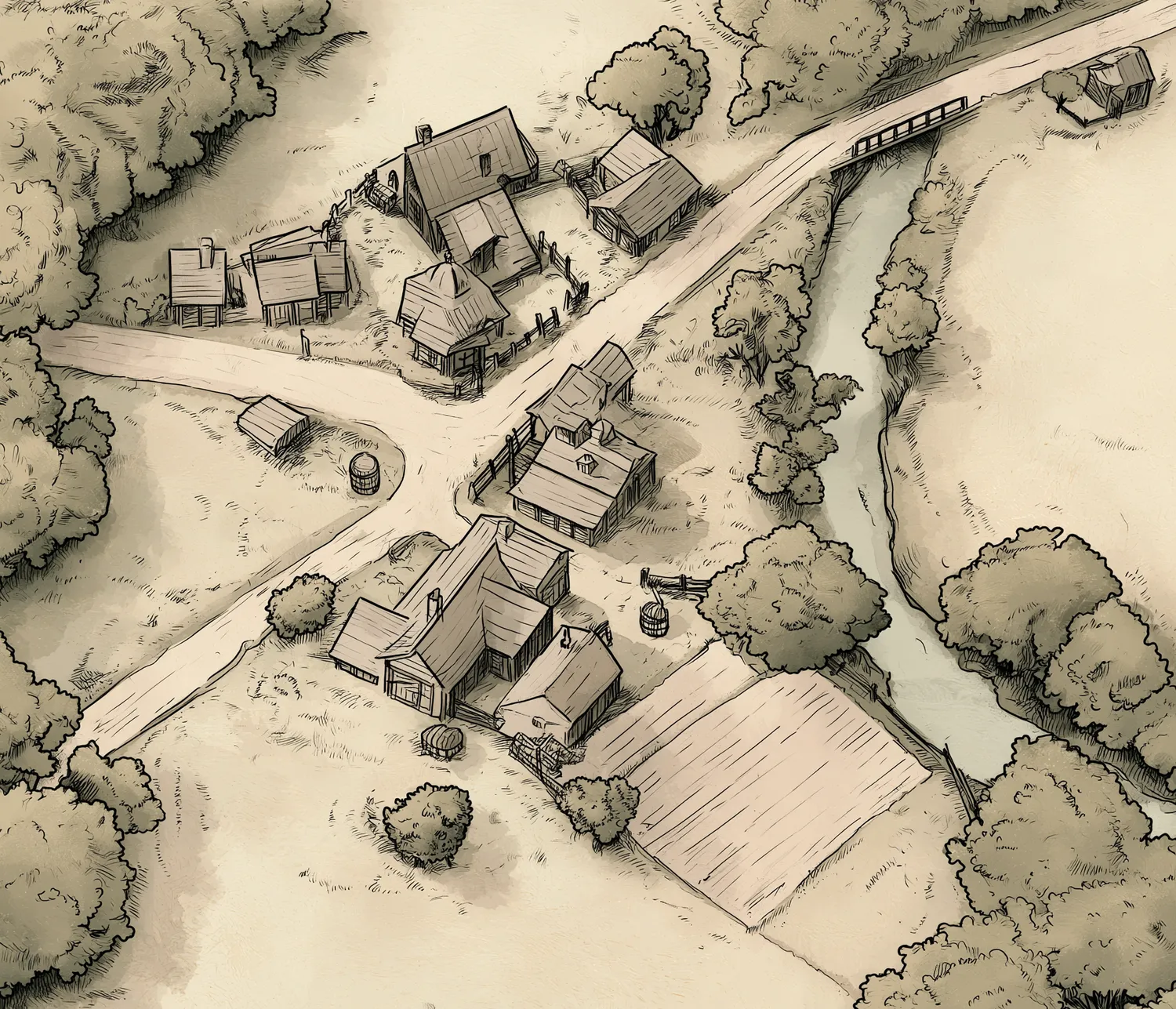
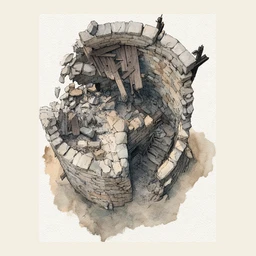
Let's use a simple example. The party is traveling through a mountain pass when a group of bandits attacks from behind a ruined watchtower.
You've prepared six bandits and their captain. The bandits want to rob travelers, and the party has enough resources to defeat them without an extraordinary amount of difficulty.
The first round goes well. Arrows come from the tower, the fighter charges the nearest attacker, and the wizard uses a spell that forces several enemies to reposition. Everyone has something to react to.
By round three, however, the captain is badly wounded, four bandits are dead, and the remaining two are still standing in the road attacking the characters nearest to them. Everyone knows the party has effectively won, but the enemies continue fighting until their hit points reach zero.
Another fifteen minutes pass while the group finishes the encounter.
The problem isn't necessarily that anyone was slow. It's that the fight stopped presenting interesting decisions before it ended.
You can improve this encounter without changing its difficulty, adding elaborate mechanics, or asking your players to rush their turns.
You need to think about what the combatants are trying to accomplish.
Give enemies a reason to fight beyond reducing hit points
Bandits generally don't attack travelers because they enjoy participating in balanced tactical encounters. They want money, supplies, prisoners, or something else they believe is worth the risk.
That motivation should influence their behavior.
If the captain orders an ambush because the group needs food, the bandits may attempt to seize the party's pack animals rather than kill everyone. If their plan fails and several companions are wounded, they might retreat. If the captain falls, the remaining attackers could surrender or scatter.
Suddenly, the fight has possibilities beyond eliminating every enemy.
The players may decide to pursue the fleeing bandits, negotiate a surrender, protect their supplies, or allow the survivors to escape. Any of those decisions can lead to consequences later.
This approach also prevents the strange situation where ordinary criminals fight to the death against obviously superior opponents for no compelling reason.
Not every enemy should flee, of course. Fanatics, desperate defenders, mindless undead, and creatures protecting their young may behave very differently. The point is to give their actions a believable reason.
When enemies have objectives, combat becomes an interaction between opposing intentions rather than a sequence of attacks.
Make the battlefield matter
A featureless room with five enemies can be perfectly serviceable, especially when a fight is brief. But if you expect an encounter to occupy a substantial part of the session, the environment should probably contribute something.
Return to the ruined watchtower. One bandit is firing from an elevated platform, a narrow section of road limits movement, and an old wooden bridge crosses a steep ravine nearby.
Now the players have choices that aren't simply different ways of dealing damage. They might climb the tower, cut off the bandits' retreat, use the terrain for cover, or try to force the captain away from the bridge.
You don't need to fill every battlefield with dangerous traps or complicated environmental mechanics. In fact, doing so can slow combat down even further.
A couple of meaningful features are usually enough, particularly if they interact with the objectives of the combatants.
If the bandits are trying to escape with a stolen chest, the bridge matters because controlling it changes the outcome. If the characters are trying to rescue a prisoner, the tower matters because that's where the captive is being held.
Terrain becomes interesting when it influences decisions, not merely because you've drawn more objects on the map.
Let the situation change
One reason long fights become repetitive is that the situation remains essentially the same from beginning to end. Characters move into position, establish a routine, and continue repeating it until the enemies are defeated.
Introducing a meaningful change can prevent that.
Perhaps the bandit captain realizes the ambush has failed and orders a retreat. Maybe a wounded horse panics and blocks the road, separating two characters from the rest of the party. Perhaps the wizard's fire spell ignites the dry wooden platform beneath the archers.
These developments don't need to be planned as dramatic set pieces. They can emerge naturally from the situation and the actions the players have already taken.
The important thing is that they give people something new to consider.
An encounter doesn't need a surprise every round. Constantly introducing complications can become just as exhausting as a fight that never changes. But one or two developments during a substantial encounter can make the difference between a memorable scene and twenty minutes of repeated attack rolls.
Make initiative easier to follow
Once the encounter itself is interesting, it's worth looking at the practical side of running it.
Initiative is a common source of small delays, particularly when several creatures act at different points in the round. Players forget who's next, the DM loses track of which enemy has acted, and conditions or ongoing effects get overlooked.
A visible initiative order can reduce that confusion.
Some groups use cards hanging over the GM screen. Others prefer a notebook, whiteboard, spreadsheet, or digital initiative tracker. The best option is the one that makes the current turn and upcoming turns obvious without requiring constant administration.
If a player knows their turn is approaching, they're more likely to start thinking about what they want to do. That doesn't mean they must make a final decision before seeing what the previous character does, but they can at least review their options.
The DM benefits from the same principle. Having monster statistics, current hit points, conditions, and relevant abilities readily available means less time searching during the encounter.
Digital tools can help here, particularly if your group already uses maps and character information on a screen. Talehaven's maps carry player tokens, fog of war you paint as the scene opens up, and an initiative tracker for the turn order, with character and monster entries alongside them.
The purpose of those features isn't to replace the GM's judgment. It's to make the information needed during combat easier to manage.
Don't turn every turn into a rules seminar
D&D has plenty of rules, and some interactions genuinely require clarification. But a minor uncertainty doesn't always justify stopping the encounter for ten minutes while everyone searches for the definitive interpretation.
If a ruling affects the outcome in a major way, taking time to check it makes sense. Otherwise, the DM can often make a reasonable temporary decision and look up the exact rule after the session.
This works best when the group agrees on the approach beforehand. Players should know that a temporary ruling isn't an attempt to take away their abilities or change the rules whenever the DM finds something inconvenient.
It's simply a practical way to keep the game moving.
The same applies to discussions about positioning, cover, and movement. If the map is unclear, establish the relevant facts and make a decision rather than spending several minutes debating a difference that won't materially affect the encounter.
Precision matters, especially in tactical games. But it should serve meaningful choices rather than becoming an obstacle to making them.
Know when the fight is over
One of the most useful combat pacing skills is recognizing when an encounter has reached its natural conclusion.
That doesn't always happen when the final enemy reaches zero hit points.
If the bandits have lost their captain and most of their group, surrendering or fleeing may make more sense than continuing the fight. If the party has successfully rescued the prisoner and escaped across the bridge, the objective may already be complete.
A battle can also end through negotiation, retreat, intimidation, or a change in circumstances that makes further fighting pointless.
None of this means the DM should simply declare victory whenever a fight starts feeling slow. The outcome still needs to follow from the situation, the rules, and the decisions made at the table.
But you don't need to continue rolling attacks against enemies whose defeat is effectively inevitable and whose continued resistance serves no interesting purpose.
Give the combatants believable reactions to what has happened. Often, that's all you need.
A better version of the watchtower ambush
Let's return to our original encounter and change a few things.
The bandits still have the same general capabilities, and the party still encounters them on the mountain road. This time, however, their objective is to steal a chest carried by the party rather than kill every traveler.
The captain positions two archers in the watchtower while the remaining bandits block the road. During the first round, the attackers attempt to separate the party from its pack animals. The characters now have an immediate choice between fighting the nearest enemies and protecting their supplies.
If the ambush begins to fail, the captain orders a retreat toward the bridge. The party can pursue, negotiate, or let the survivors escape with whatever they've managed to take.
The encounter could still take several rounds. It might even take longer than the original version if the players choose to negotiate or pursue the fleeing bandits.
But those extra minutes are spent making decisions that matter, rather than repeating attacks against the last two enemies.
That's the distinction we're looking for.
Interactive demo
One Encounter. Two Ways to Run It.
Same battlefield. Similar opponents. Very different decisions.
 Ruined tower
ObjectiveReduce the other side to zero.
Round 1 · The ambush
- Enemies
- Attack whoever is closest.
- The party decides
- Hold the road, or pull back out of the tower’s reach?
- Why it matters
- A real choice, and the last one this version offers.
Read both versions as text
A fight to the death
Objective: Reduce the other side to zero.
- Round 1 - The ambush. Attack whoever is closest. The party decides: Hold the road, or pull back out of the tower’s reach?
- Round 2 - The line holds. Still attacking whoever is closest. The party decides: Focus one of them, or spread the damage?
- Round 3 - Four of them are down. The survivors keep attacking. The party decides: None that changes anything.
- Round 4 - Two left, still swinging. No reason to stop, so they do not. The party decides: Keep rolling.
- Round 5 - The last one falls. Nothing left to attempt. The party decides: Search the bodies.
A fight with a purpose
Objective: Take the chest and cross the bridge.
- Round 1 - Covering fire. The archers pin the road from the ruined tower while the others move wide. The party decides: Answer the archers, or close with the ones on the road?
- Round 2 - They are not here for the party. One slips past the fighting and reaches the pack animals. The party decides: Break off to guard the chest, or hold the line and risk it?
- Round 3 - The plan starts slipping. The captain sees one of his people down and the chest still guarded. The party decides: Press the captain, or stay between the bandits and the chest?
- Round 4 - Fall back to the bridge. The captain calls the retreat, and one of them has a grip on the chest. The party decides: Chase them, or let them run and keep what is left?
- Round 5 - At the bridge. Cross, and keep whatever they are still carrying. The party decides: Pursue across, hold the near side, or offer them terms?
An interesting encounter isn’t defined by how quickly the enemies die. It’s defined by the decisions players get to make.
Five things to check before your next combat encounter
Before the session, spend a few minutes asking yourself:
What do the enemies actually want?
Give them an objective that makes sense beyond reducing the party's hit points.
What makes the battlefield relevant?
Include one or two environmental features that influence movement, positioning, or decisions.
What might change during the fight?
Consider how the enemies react to losses, unexpected tactics, or the failure of their original plan.
Can everyone find the information they need?
Keep initiative, monster abilities, hit points, and conditions accessible without constantly searching through notes.
How might the encounter end?
Think about surrender, retreat, negotiation, or achieving an objective rather than assuming every fight ends with the death of every opponent.
You don't need a complicated encounter design framework to answer those questions. A few sentences are often enough, kept with the scene they belong to.
Better combat isn't necessarily faster combat
Some of the best fights in tabletop RPGs take a long time. A major confrontation that resolves several sessions of tension deserves room to breathe, especially when the players are making difficult decisions and the outcome remains uncertain.
There's nothing inherently wrong with spending two hours on a battle that everyone is genuinely enjoying.
The problem is spending those two hours on a battle that stopped being interesting after the first twenty minutes.
Improving combat pacing isn't simply about making players roll faster or removing complexity. It's about reducing unnecessary delays, giving opponents believable goals, and making sure the situation continues to offer meaningful choices.
The next time you're preparing an encounter, try thinking less about how many rounds it should last and more about what the combatants are trying to accomplish.
You may find that the fight becomes easier to run, more interesting to play, and much easier to remember afterward.